

Somatic Therapy
When anxiety, burnout, or a powerful experience leaves you feeling far from yourself, somatic therapy offers a way to listen more deeply—to your body, your nervous system, and what is asking for your attention.
When understanding hasn’t been enough…
You may know why you feel anxious and still find yourself bracing for the next thing. You may be exhausted but unable to slow down, or notice that you’ve lost touch with what you want and need.
Maybe you’ve tried therapy before. You can explain the pattern, but it keeps showing up in your body, your relationships, or the way you move through the day. Or a psychedelic experience opened something meaningful, and you’re still making sense of what happened and how it belongs in your life.
Somatic therapy makes room for more than the story you can tell. We pay attention to what you notice in your body and emotions as we explore what’s happening.
What is Somatic Therapy?
Somatic therapy is a body-aware approach to psychotherapy. Alongside talking about what brings you in, we pay attention to sensations, breathing, movement, emotions, and impulses as they arise. In psychology, sensing and making sense of signals from within is called interoception. These signals can offer information about what you’re experiencing, though their meaning depends on your circumstances and your own interpretation.
In sessions, we might pause to notice a change in breath, tension, energy, or an impulse to move, then explore how it relates to what’s happening in your life. You choose what feels useful to notice, and we move at a pace that feels workable. We connect what comes up with your thoughts, relationships, and everyday concerns.
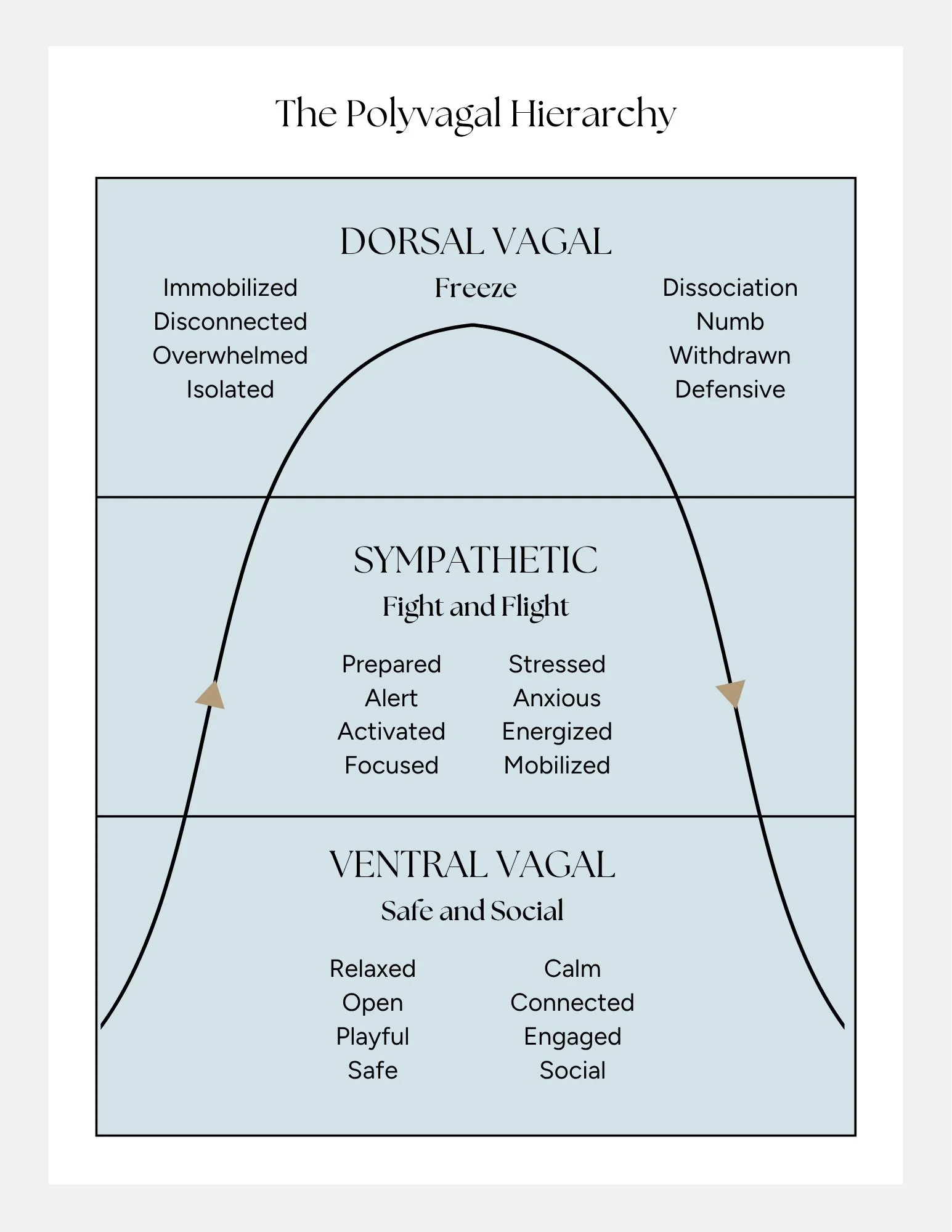
Polyvagal Theory is one framework that informs my understanding of how nervous-system responses may shift with cues of threat, connection, and support. I use it as a clinical lens for exploring experience, not as a diagnosis or a fixed map of what is happening within you.
A note on the science: Research on body-oriented therapies for PTSD is promising, though researchers call for more study to clarify which approaches help whom. Research on interoception also suggests potential, while evidence connecting it to symptom improvement is still developing. PMC

What to Expect in
Somatic Therapy Sessions
Our sessions draw from somatic depth therapy, Gestalt, Hakomi, parts work, mindfulness, and compassion-focused approaches. We start with what matters to you and pay attention to your experience as it unfolds.
At times, I may invite you to notice a sensation, a change in your breath, or what happens inside as you speak about a familiar situation. We can take this in small steps, pausing when something feels like enough for now. The aim is not to push through or produce a breakthrough. It’s to make room for awareness, connection, and your own response.
The relationship matters, too. Being met with careful attention can support you in turning toward your experience with more curiosity and less judgment. Over time, this may help you recognize what’s happening sooner and find more choice in how you respond.
My work is also shaped by ecosomatics: the understanding that our connection with our bodies and with the natural world are intertwined. Nature is not just a metaphor here; it can be a source of perspective, belonging, and reconnection.

What Might Change
There are no guaranteed outcomes, and this work doesn’t follow a fixed timetable. Over time, you may find that you can:
Notice your needs and limits with greater clarity
Stay more present when anxiety or stress rises
Recognize familiar responses as they’re happening
Meet yourself with more compassion when old patterns return
Make choices with a stronger sense of your own knowing
Bring meaningful insights from a psychedelic experience into daily life
This work is about guiding you back to wholeness through your body’s organic intelligence.
Is Somatic Therapy right for you?
Somatic therapy may be a fit if you want to understand how stress, emotions, and relationships show up in your body and everyday life. You may already recognize familiar patterns and still feel caught in them. In our work, we can slow down, notice what’s happening in the present, and explore what you’d like to feel different.
As a somatic practitioner, I’m deeply invested in a collaborative process shaped by curiosity, consent, and respect for your pace. You don’t need to know how to read your body or have the right words. We can begin with what you notice, what feels unclear, or what you hope might change.
If you’re wondering whether this approach fits what you’re looking for, we can talk it through in a consultation.